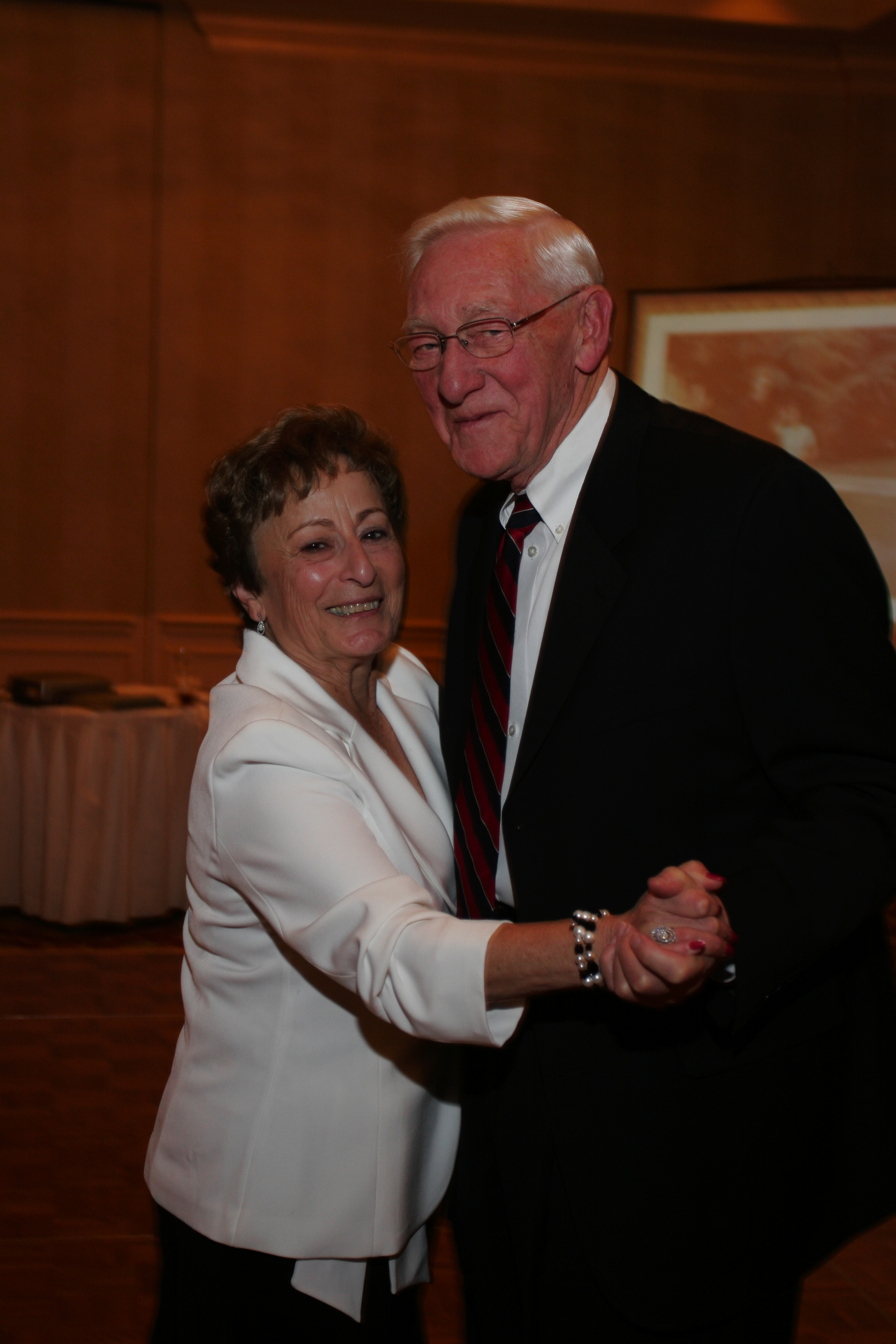
My dad’s name is Jack Henry. Born the 3rd of 4 to a couple in western Pensylvania, his dad worked in the coal mines when he could but he was sick so much that everyone in their family had to pitch in. His older brother by 7 years moved away when Jack was pretty young so Dad threw papers and ran errands and had other odd jobs that helped support the family.
They ended up in Akron, OH and at age 17, he faked his age and got a job with a trucking company. For reasons we never fully knew, he joined the military in 1948 and spent a couple of years in Germany right before the Korean War. After the army, back at the trucking company, he started to move up in the union, which was a career strategy of sorts in the mid 1950’s in northeast Ohio.
 In 1957, he married Shirley Henry after dating a few years, and shortly thereafter, I came into the picture. My father has always done what needed to be done and he worked 2 and 3 jobs at the same time he went to Akron U at night for 7 years to complete his degree. He was also quite a driver. I remember 5 different trophies we had from different truck driving rodeo’s in the late 1950’s. As kids, we broke a couple of these during pillow fights in the den.
He also became the secretary of the Akron Teamsters Union, and around 1960 he tells a story of attending a union dinner and looking critically at the people who held the positions of leadership in the union. He decided that night that he didn’t want to end up like them. He didn’t respect their leadership or their lifestyle. His future wouldn’t be in the union. Risking ridicule, he pursued a management position at the trucking company and became a safety supervisor. About a year later, a $5 per week promotion moved us from Akron, OH to Chattanooga, TN, which was culture shock in the early 1960’s. But Dad did what he had to do. Promotions required transfers and if he was going to move the family ahead, he had to move the family ahead.
We moved again in a year to Nashville and less than 4 years later to Louisville, KY. In 1969, we moved to Atlanta, GA in June and to Memphis, TN in August, right before I started 7th grade. Mom made Dad promise that we’d stop moving when I started high school and he kept his promise by 3 days. He had to keep it again, passing up an opportunity or two in the early 70’s.
Dad built a great business in Memphis in the 1970’s. He was VP of a small trucking company that prospered throughout the decade. People both enjoyed working there and worked hard. Everyone had stories about working for “Mr. Henry.” Everyone called him Mr. Henry. To this day, if anyone calls me Mr. Henry, I simply ask, “Where?”
Working around the company throughout high school, he would assign me to supervisors, each with the freedom to make sure I worked. There would be no special treatment for the boss’s kid. About the time I turned 18, his company voted to go union and he made a deal with another Terminal Manager in town. That man’s son would go to work at Dad’s company and I’d go to work at the other company. It became a great lesson for me. My father’s standard was pretty high and I found it easy to do a good job for the new company.
 At age 55, he took his life savings and invested it in a trucking company of his own which has been in business and profitable for 25 years. His greatest pride has been building a self-supporting organization that gave people an opportunity to earn a living. Profit is necessary for that. So is quality. My Dad had a career that helped others feed their families, send kids to school, build houses, fund charities, and do other great works. Every life is part of this bigger picture, creating value for future generations. My dad taught me to be responsible about my contribution, making sure I give more than I take so there is room for society to prosper.
He went out on a limb with that company and moved my family, and his first grandchild back to Memphis to work for the family business. Dad shouldered a lot of responsibility in those early days that I never gave him enough credit. We tried twice for me to work for his company, the first time it lasted 6 and a half years and the second time only 2 years. It’s hard for oldest sons and dads or oldest daughters and moms. So I’ve been out of the business since 1996 and the business is now under different ownership.
As I look back I see the one overriding principle my father taught me: who you are matters. It’s much more important than what you say or what you intend. It’s much more important than who you know or how much stuff you have. Jack Henry always did what he had to do. He sat at the hospital for hours never leaving my side in the hours after a bad car accident in 1979. He fought me all throughout my teen years and my early adult years. He took his responsibility to raise his children and provide for his family seriously. He took seriously his responsibility to have a profitable business so that people could grow. He lived his life doing what he believed he owed society; taking care of his family and making sure they were productive members of society. My brothers and I have all been pretty successful, but the sheer force of who Dad is has forged us to be who we are.
 Your who-you-are is the only message you have. It’s the only story anyone will remember of your life. My father set the standard in our family. His “who-you-are” wasn’t what I thought it should be so I spent several years in rebellion. Dad isn’t perfect – no one is – but he is who he is. I didn’t understand until recently, but his life has shown me that who you are matters. Bring the best “who-you-are” to the world and make an impact that will last. My life is shaped by his life.
Thanks Dad. I appreciate your generous spirit, your loyalty and your commitment to fairness and responsibility. You blessed me and my family with your life. I love you.


 On July 4, 1776, a revolution formally began that had been brewing for years. Prior to that time, leadership was a class. You were born into it or you weren’t. You either ruled or you didn’t. On that day, We, the People chose to stop being victims of a government outside of our control and start being responsible to create a govenrment of, by and for the very people being governed.






 Mike Henry Sr.